
What are quakers and why they matter in coffee
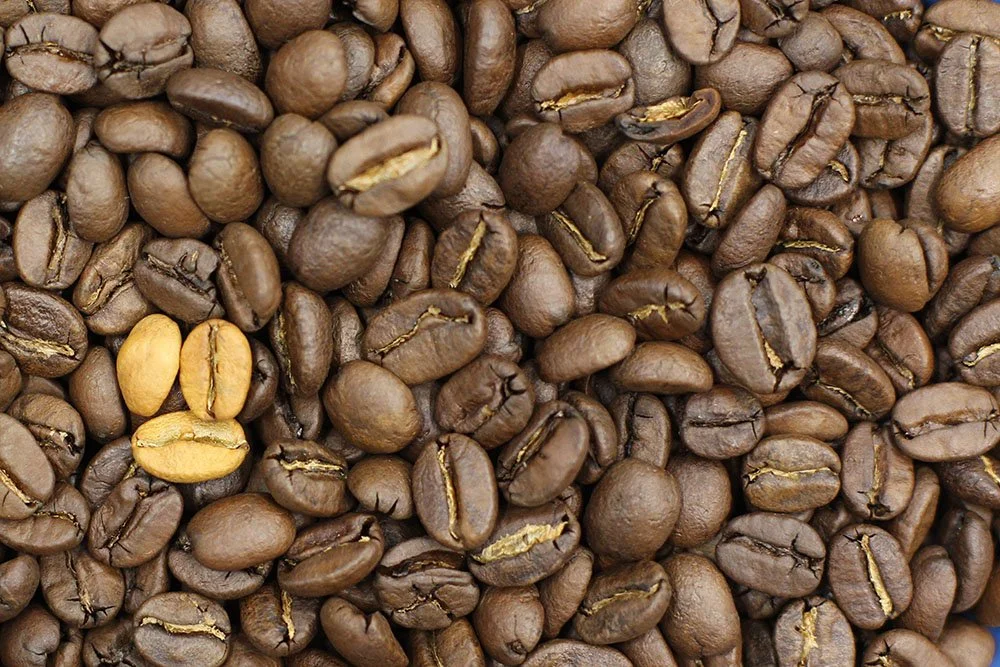
If you’ve ever noticed unusually pale beans after roasting, you’ve likely encountered quakers. These beans stand out immediately: they remain light in color, refuse to develop properly during roasting, and often carry unpleasant flavors.
Quakers are considered a green coffee defect because even a small number of them can noticeably degrade the overall cup quality. Understanding why they appear — and how they affect flavor — helps explain why sourcing and sorting matter so much in specialty coffee.
What exactly is a quaker bean
A quaker is a coffee bean that developed inside an unripe cherry.
Because the cherry did not fully mature, the seed inside never completed its biochemical development.
As a result, quaker beans lack:
sufficient sugars,
properly formed proteins and lipids,
balanced acidity,
and the precursors needed for browning reactions during roasting.
This is why quakers behave differently in the roaster and taste fundamentally different in the cup.
Why quakers end up in coffee
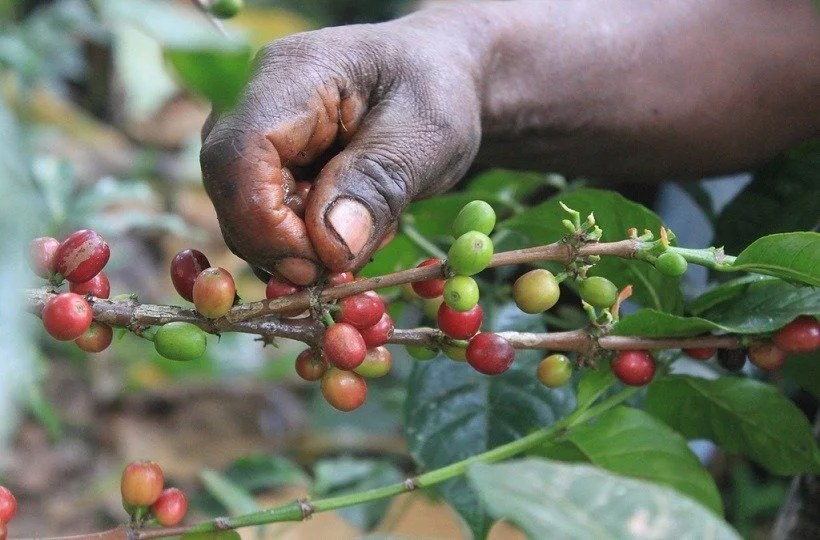
Processing method plays a major role
With natural (dry) processing, whole cherries are dried intact. As they dry, both ripe and unripe cherries darken, making visual separation nearly impossible. Even when harvesting is done carefully, some unripe cherries inevitably make it into the drying phase — and later become quakers.
With washed processing, the risk is lower. Unripe cherries are less dense and usually float during fermentation, allowing producers to remove them early. This is why washed coffees typically contain fewer quakers. Still, some underripe cherries can slip through depulping, and once the fruit is removed, they are no longer distinguishable.
Soil nutrition is an overlooked factor
Not all quakers come from obviously unripe cherries.
Another common cause is nutrient deficiency during cherry development.
If the soil lacks essential microelements — and fertilization is inadequate — the seed may fail to develop properly even when the cherry appears visually ripe. In these cases, quakers are not a harvesting issue but an agronomic one.
This explains an interesting contrast between origins:
In Brazil, mechanical harvesting leads to a higher percentage of unripe cherries, yet quakers are relatively rare. Most farms conduct soil analysis and apply mineral fertilizers consistently.
In Ethiopia, harvesting is predominantly manual, and pickers are often incentivized to select only ripe cherries. Still, quakers are common because coffee frequently grows on small household plots with limited soil management and inconsistent nutrition.
Before processing, ripe and unripe cherries are easy to identify. After processing, they are not.
Quakers and quality standards
Because quakers negatively affect flavor, their presence is tightly regulated.
According to SCA standards, specialty coffee should contain zero quakers per 100 grams.
In real-world production, however, this standard is difficult to meet consistently — especially in naturally processed coffees.
For this reason, CQI standards allow up to three quakers per 100 grams, acknowledging the realities of agricultural production, even at high quality levels.
How quakers affect flavor
Quaker beans fail to undergo normal roasting chemistry.
Because they lack sugars and amino acids, Maillard reactions are weak or absent, caramelization does not occur, and the beans remain pale even at darker roast levels.
In the cup, quakers contribute:
papery, cardboard-like notes,
dryness and hollowness,
a muted or flat aroma,
and a general loss of sweetness and clarity.
Even a single quaker can noticeably disrupt an otherwise clean and balanced cup.
Can quakers be removed completely?
In green coffee, quakers are extremely difficult to detect.
The most reliable methods involve:
manual sorting after roasting, or
expensive optical color sorters.
Both options are time-consuming and increase costs significantly.
This is why the most effective strategy is prevention rather than correction:
healthy, nutrient-rich soil,
proper fertilization,
selective harvesting,
and careful sorting throughout processing.
Minimizing quakers starts long before roasting — it starts at the farm.
