
How to choose the right grind size for coffee
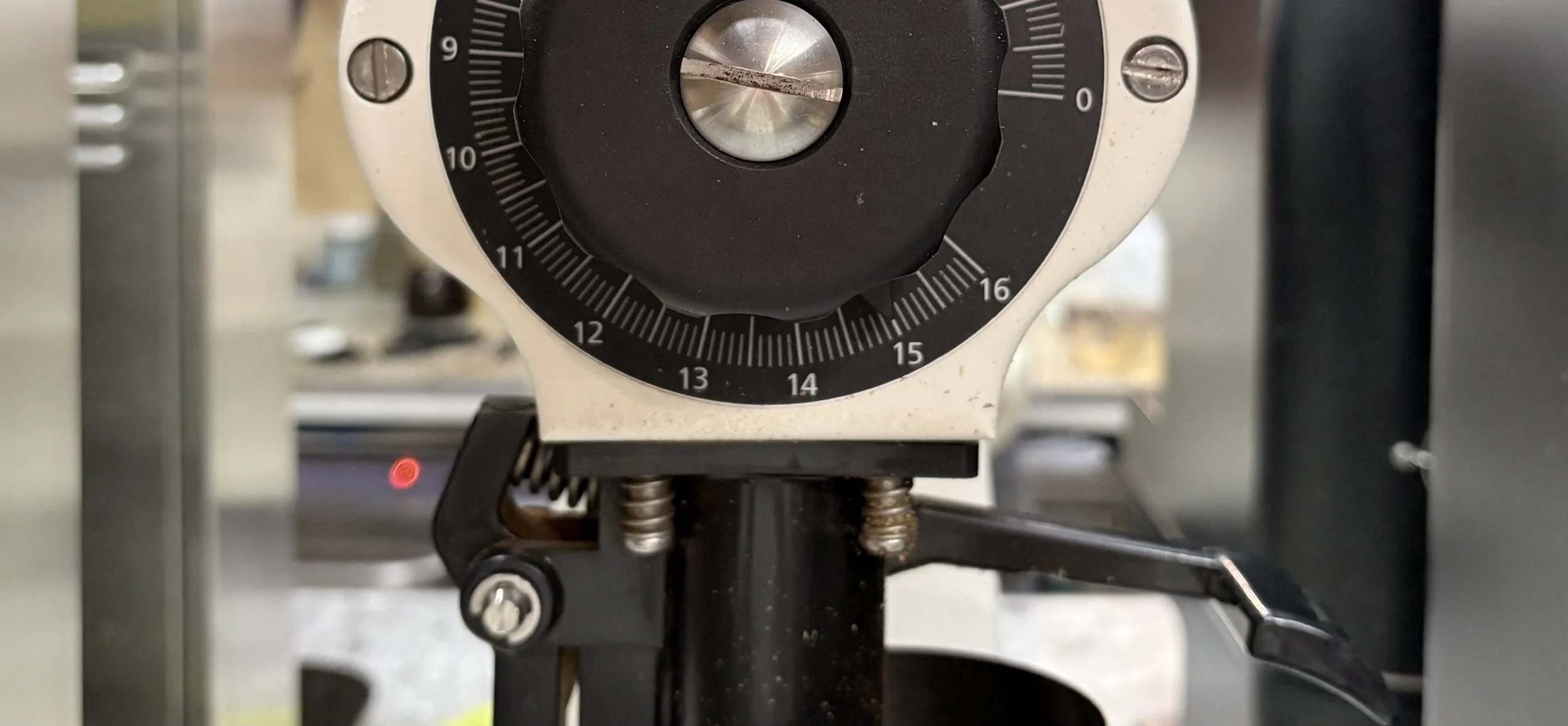
Even if you start with great beans, good water, and a solid brewing method, your coffee can still taste disappointing. More often than not, the problem is the grind size.
Grind size determines how quickly and how efficiently coffee releases its flavors into water. If it’s too fine or too coarse for a specific brewing method, the result will be either over-extracted (bitter, heavy) or under-extracted (thin, sour, and hollow).
Professional baristas study extraction in depth, but home brewers usually have to learn by trial and error. Most people know that Turkish coffee requires a very fine grind and French press works better with a coarse one — but why that is rarely explained.
In this article, we’ll cover:
how coffee extraction works,
how grinding affects flavor,
why grind consistency matters,
and how to choose the right grind size for any brewing method.
How coffee extraction works
Brewing coffee is a process called extraction.
Extraction is the transfer of flavor and aromatic compounds from ground coffee into water.
Three main factors control this process:
grind size,
contact time with water,
water temperature.
The greater the contact surface and the longer the contact time, the more compounds are extracted.
A well-balanced cup usually contains about 20% dissolved coffee compounds.
More than that, and the coffee becomes bitter and heavy. Less than that, and it tastes flat and weak.
Professionals measure this using a refractometer. At home, we rely on taste and on controlling the main variables correctly.
Why grind size matters so much
Intuitively, it may seem that coarse grounds provide more surface area. In reality, the opposite is true.
The finer the grind:
the more particles there are,
the more total surface area,
the faster extraction happens.
A simple analogy is salt: fine salt dissolves faster than coarse salt. Coffee works the same way.
So:
fine grind = fast and intense extraction,
coarse grind = slow and gentle extraction.
How coffee grinders work
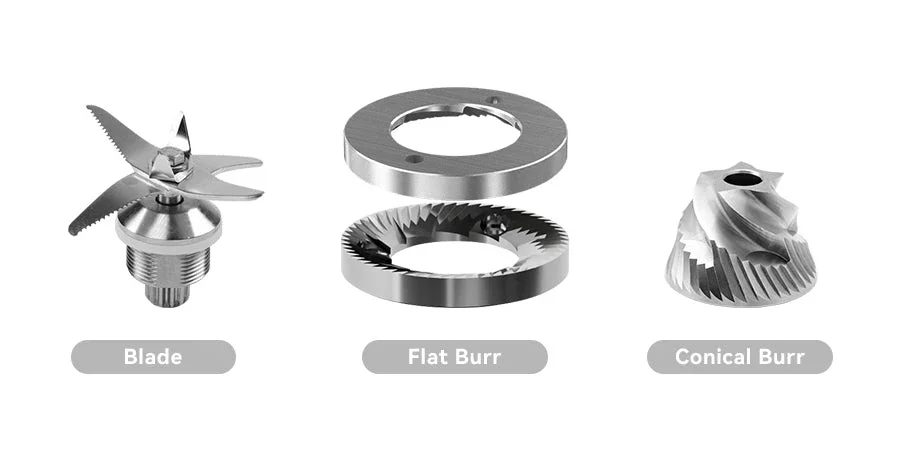
A proper grind is only possible with burr grinders.
Burrs gradually crush the beans into particles of a specific size. The distance between the burrs determines how fine or coarse the grind will be.
There are two main types:
conical burrs,
flat burrs.
Both can produce excellent results if the grinder is well-designed.
Why grind consistency is critical
A good grind isn’t just about size — it’s about uniformity.
If your dose contains a mix of:
very fine particles,
medium particles,
and large chunks,
extraction becomes unpredictable:
fines over-extract and taste bitter,
boulders under-extract and taste sour and hollow.
The result is a muddy, unbalanced cup.
Why blade grinders are a bad choice
Blade grinders don’t grind — they chop beans randomly.
This leads to:
extreme variation in particle size,
no real grind adjustment,
unstable, inconsistent flavor.
They’re fine for spices, but not for coffee.
What kind of grinder you should use at home
Electric burr grinders offer great performance but can be expensive.
If you want high-quality grinding without overspending, a manual burr grinder is often the best option:
excellent consistency,
precise adjustment,
compact size,
reasonable price.
What else matters besides grind size
Grind size is only one part of the system.
Two other key variables are:
Water temperature
Water that’s too hot can “burn” the coffee, creating bitterness.
Water that’s too cool won’t extract enough flavor.
The optimal range is usually 88–95 °C, depending on the brew method and roast level.
Brew ratio
A good starting point is:
6–7 g of coffee per 100 ml of water
Too much water → flat taste.
Too little water → overly intense and unbalanced.
How to match grind size to your brew method
General guidelines:
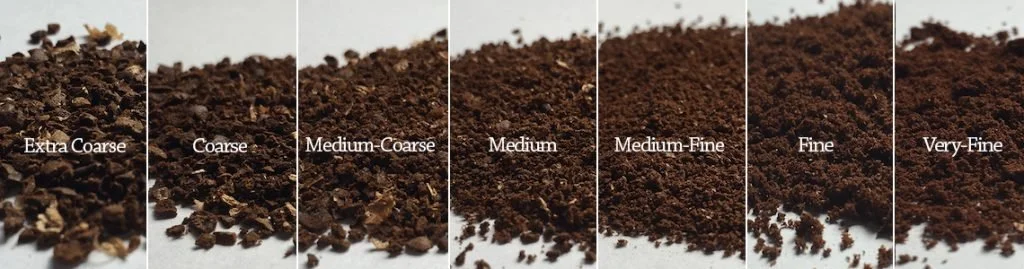
Turkish coffee — extra fine (powder-like)
Espresso — fine
Moka pot — slightly coarser than espresso
AeroPress — medium
Pour-over, V60, Chemex — medium
French press — coarse
These are just reference points, not strict rules.
How to find your ideal grind size
The only real way to dial in your grind is through tasting.
Here’s a simple process:
Use fresh coffee and good water.
Start with a standard ratio: 6–7 g per 100 ml.
Choose a grind size appropriate for your brew method.
Brew while controlling the time.
Taste.
If the coffee tastes:
heavy and bitter → grind coarser,
thin and weak → grind finer.
Repeat until the flavor is balanced.
What to remember
There is no universal grind size.
Fine grind = faster extraction.
Coarse grind = slower extraction.
Flavor depends on grind size, water, temperature, ratio, and time.
Burr grinders are always better than blade grinders.
The best way to learn is through practice.
