
Coffee Varieties: Where They Come From and Why There Are So Many
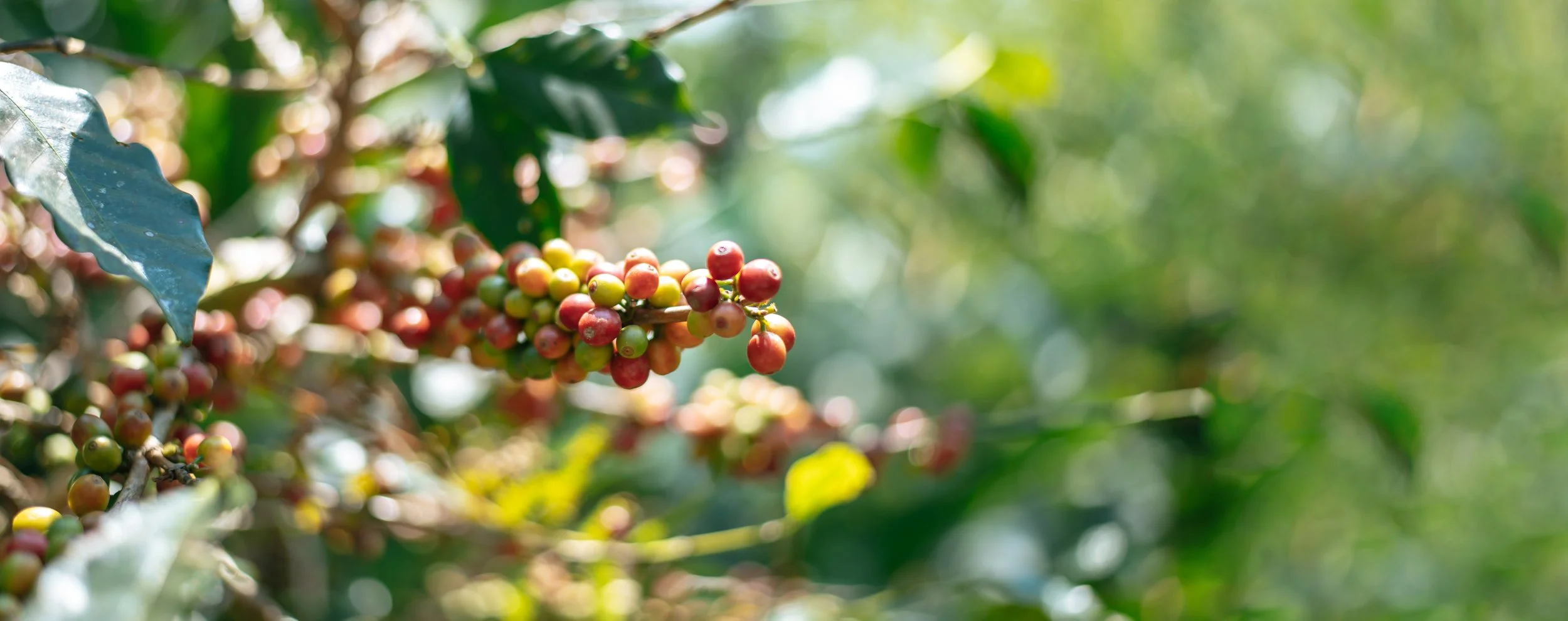
Saying “I like arabica” is a bit like saying “I like apples.”
Which ones? Sweet? Sour? Green? Red? Crunchy? Soft?
Coffee works the same way: arabica is just a species, but inside it live hundreds of distinct varieties, each with its own character, history, and flavor.
To understand why coffee from different regions tastes so unique, we first need to understand how varieties actually form.
Why Are There So Many Coffee Varieties?
Coffee is alive.
It reacts to climate shifts, soil composition, altitude, pests, diseases, shade, and even the plants growing nearby.
Over centuries, this led to a huge “family tree” of spontaneous mutations, natural hybrids, and intentional breeding.
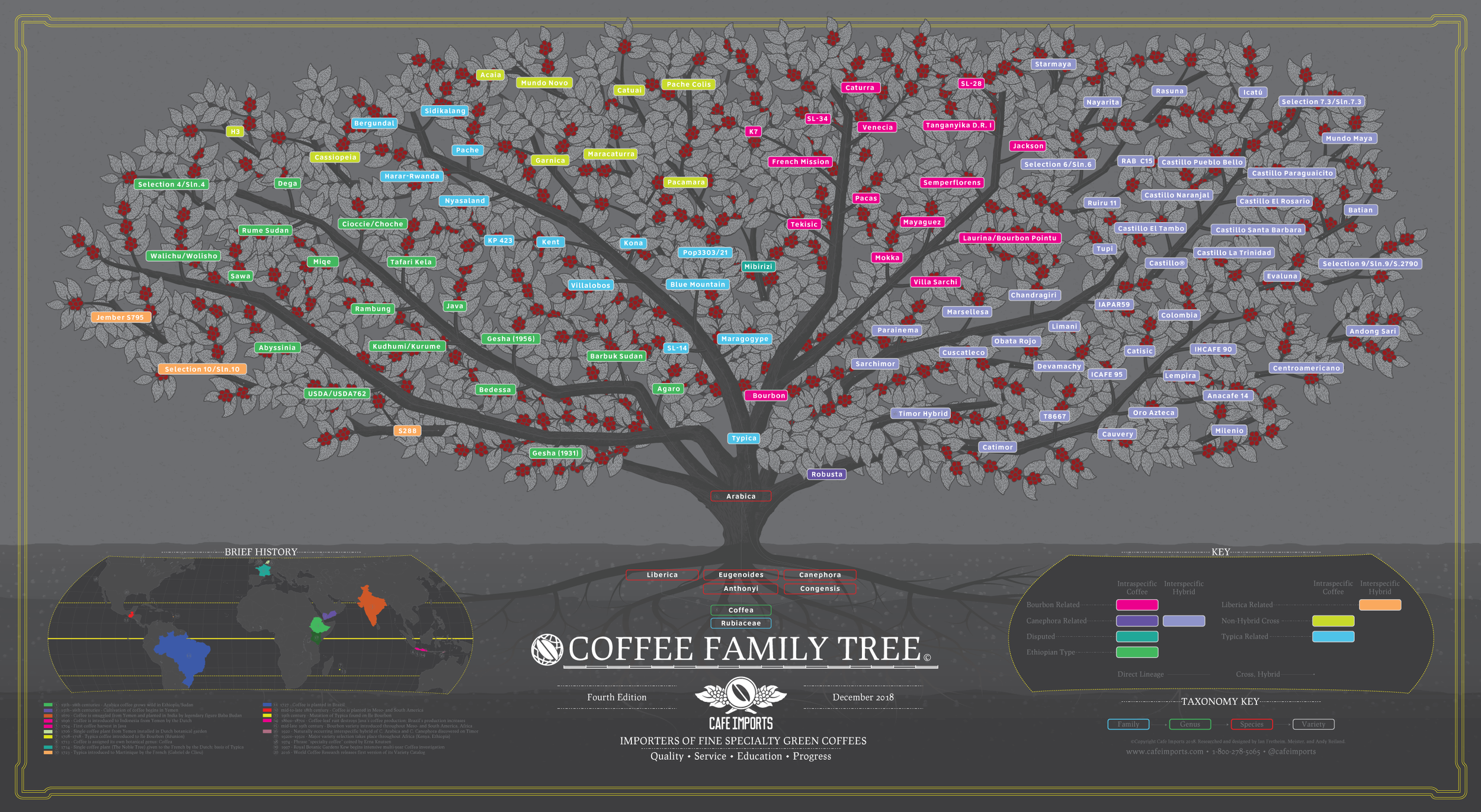
There are three main ways new varieties appear:
1. Natural Cross-Pollination — When Nature Experiments
Coffee normally self-pollinates, but wind, insects, or simple chance can carry pollen from one tree to another.
This creates a completely new genetic combination.
Sometimes the result is fantastic — the plant becomes more flavorful, resilient, or productive.
Sometimes the result is weak, sickly, or unstable.
Natural hybrids are part luck, part chaos.
2. Natural Mutations — Surprises from the Environment
When a coffee tree grows in unusual conditions — higher altitude, new soil type, harsher climate — its genetics can shift.
Leaves change shape, beans become bigger or smaller, and flavors turn brighter or more delicate.
Many legendary varieties appeared this way, including Geisha, which for decades remained obscure before becoming one of the world’s most valuable coffees.
Mutation is nature’s way of creating accidental masterpieces.
3. Selective Breeding — Human-Made Innovation
Agronomists and research centers sometimes cross two varieties deliberately to create a third one:
stronger, more productive, or more flavorful.
This is how varieties like:
SL28
SL34
Catimor
Maracatu
came to life.
Selective breeding is expensive, slow, and risky — one project can take years — so farmers rarely do it themselves.
Key Coffee Varieties That Shaped the Modern Coffee World
Typica — The Ancient Classic
Typica is one of the earliest known arabica varieties.
Its yield is low, but the flavor is so clean and sweet that many farms still cultivate it despite the risks.
Cup profile:
pure sweetness, balance, clarity.
Bourbon — Typica’s First Major Mutation
Bourbon appeared as a natural mutation of Typica.
It produces more fruit but is more vulnerable to disease.
Cup profile:
bright fruit notes, caramel sweetness, layered acidity.
Typica and Bourbon are the “parents” of most of today’s cultivated arabica varieties.
Wild Varieties Found in Nature
In the native growing regions of arabica (Ethiopia–Sudan–Kenya), researchers discovered wild varieties unrelated to Typica or Bourbon.
These include:
Geisha
Rume Sudan
Dudduka
Irgachefe / Irgalem
Seosias
and others.
They are prized for their unique, often floral and tea-like profiles.
Varieties Descended From Typica and Bourbon
Mundo Novo
A natural hybrid of Typica and Bourbon.
disease resistant
– picky about soil
Cup profile: mild bitterness, low sweetness, dense body.
Pacas
A natural mutation of Bourbon.
Thrives at high altitudes.
Cup profile: floral, spicy, balanced sweetness and acidity.
Caturra
A compact, dwarf mutation of Bourbon.
Cup profile: light body, citrus acidity, clean finish.
Maragogipe — The Giant Bean
A natural mutation of Typica, famous for its huge beans and leaves.
Cup profile: dense, floral-citrus flavor.
Downside: very low yield.
Third-Generation Hybrids
When second-generation varieties (like Caturra, Pacas, Bourbon) cross again, new complex hybrids appear.
Catimor
A hybrid of Caturra and Hybrid-de-Timor.
Strengths: very productive, highly disease-resistant.
Flavor: grassy and fruity tones; less complexity due to robusta genetics.
Maracatu
A hybrid of Maragogipe and Caturra.
Cup profile: medium body, complex acidity, ripe fruit notes.
Why Do Varieties Taste Different?
Even if two farms plant the same variety, the cup can be completely different. The reason?
altitude
soil
climate
fermentation
processing style
roasting
All these factors shape the final flavor.
Variety is just one piece of the puzzle — but an important one.
Which Coffee Variety Is the Best?
There is no universal “best” variety.
All arabica varieties have roughly the same caffeine content, so none of them are “stronger” or “more energizing.”
The only meaningful difference for most people is flavor — and flavor is personal.
Some prefer the floral brightness of Geisha.
Others love the balanced sweetness of Bourbon.
Someone else enjoys the dense, bold Maragogipe.
The best variety is the one you enjoy.
