
The Anatomy of a Coffee Cherry: A Simple Guide to a Complex Fruit
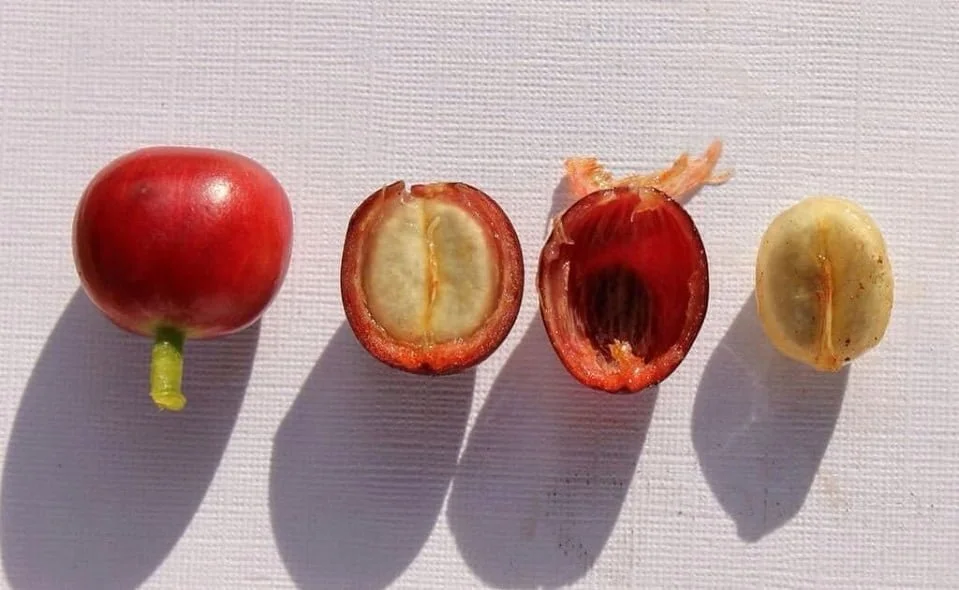
A coffee cherry may look like a small, ordinary fruit, but inside it hides a multi-layered biological system created to protect and nourish the seeds we later call “coffee beans.” Every layer has a role, and removing even one part would disrupt the development of the seed, making high-quality coffee impossible.
This guide explains how the coffee cherry is structured — in simple, accessible language.
🔍 What is a coffee cherry made of?
A typical cherry includes:
the skin,
the pulp,
the mucilage (a sweet, sticky gel),
the parchment layer,
the silver skin,
and the seeds — usually two.
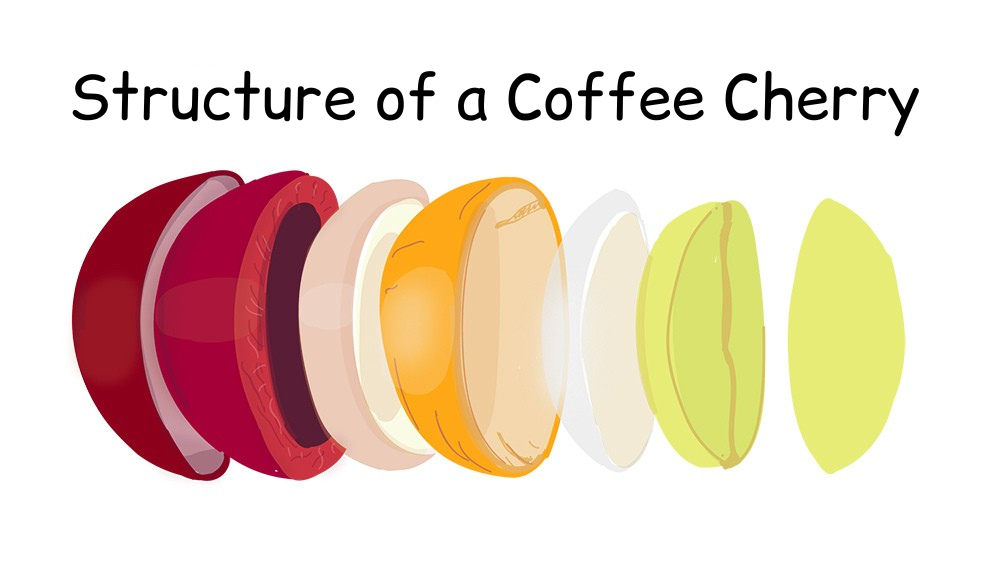
Some classifications list four or seven layers, but these are the most essential.
Each layer protects the developing seed and ensures it grows into a healthy, flavorful coffee bean. Without this system, the seed would be vulnerable to damage, disease, or underdevelopment.
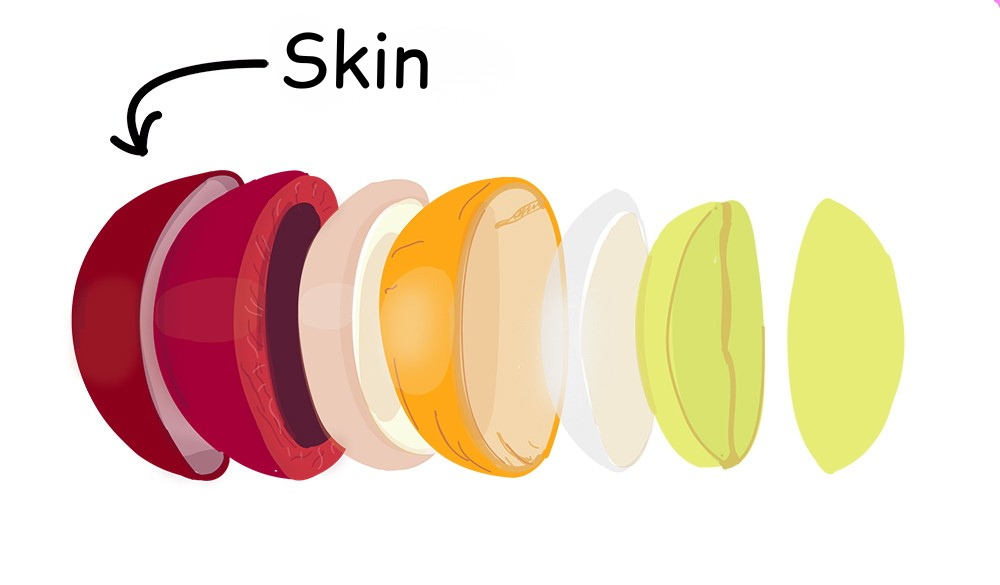
🟥 1. The Skin: The Cherry’s First Line of Defense
The skin shields the fruit from sunlight, insects, injuries, and environmental stress.
Unripe cherries are green because they contain chlorophyll. As the fruit ripens, chlorophyll breaks down, and the color shifts to red, yellow, or orange.
The skin not only protects but also indicates ripeness — a crucial factor for coffee quality.
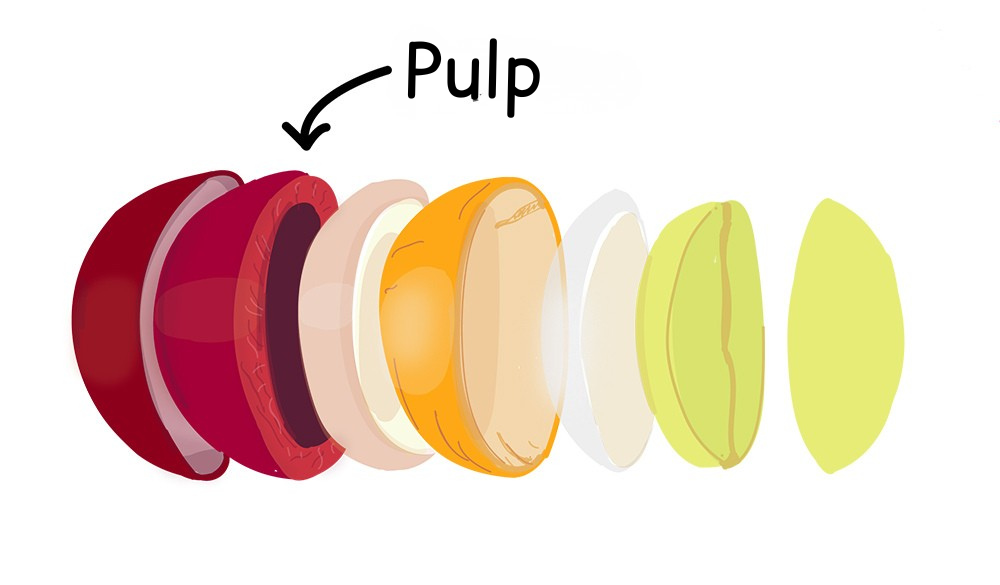
🟧 2. The Pulp: A Cushion and Nutrient Source
The pulp surrounds the seeds and holds them in place.
In unripe cherries it is firm, but it softens as the fruit matures, becoming juicy and sweet. This sweetness is essential for natural processing methods, where whole cherries are dried with the pulp intact.
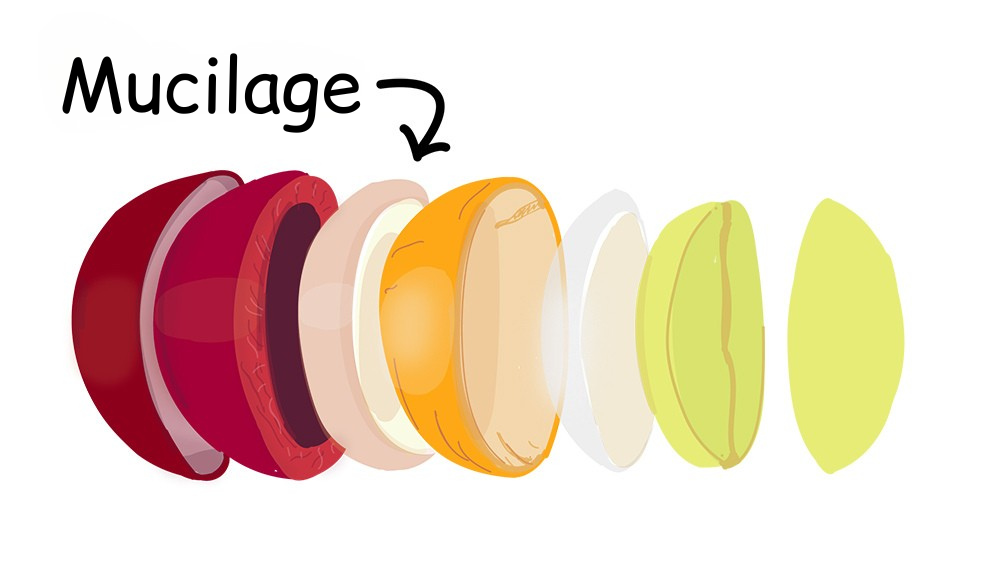
🟨 3. The Mucilage: A Sweet Gel Layer
Under the pulp lies the mucilage — a sticky, sugary gel packed with pectins and minerals.
It serves several roles:
helps the seed separate easily during wet processing,
contributes sweetness in certain processing methods,
reflects the maturity of the fruit.
Different coffee varieties produce different amounts and densities of mucilage, which influences the cup profile.
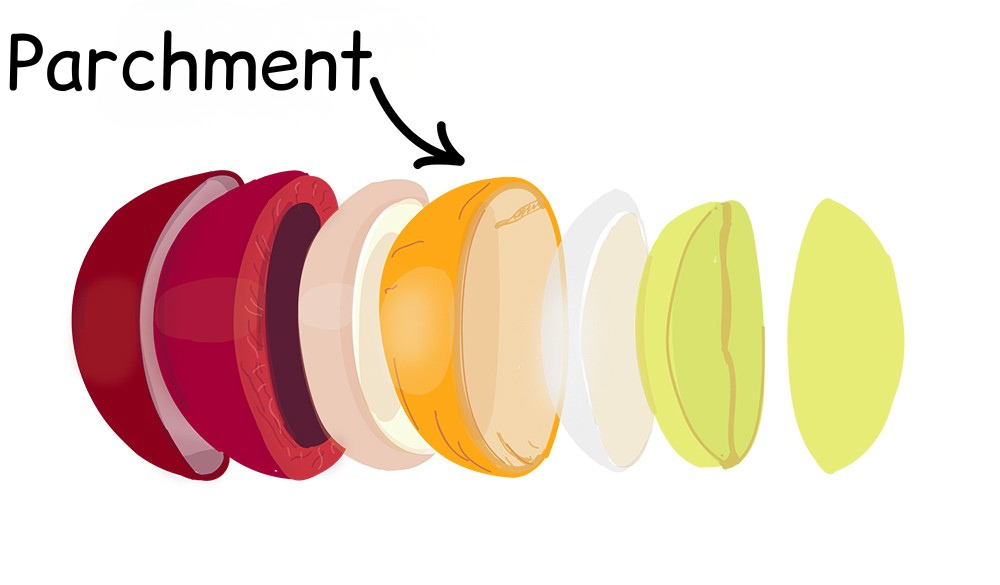
🟫 4. The Parchment Layer: Nature’s Protective Shell
This papery layer surrounds the seed after the pulp is removed.
It protects the bean from moisture, contaminants, and physical damage throughout drying and storage.
Parchment works almost like a natural packaging material.
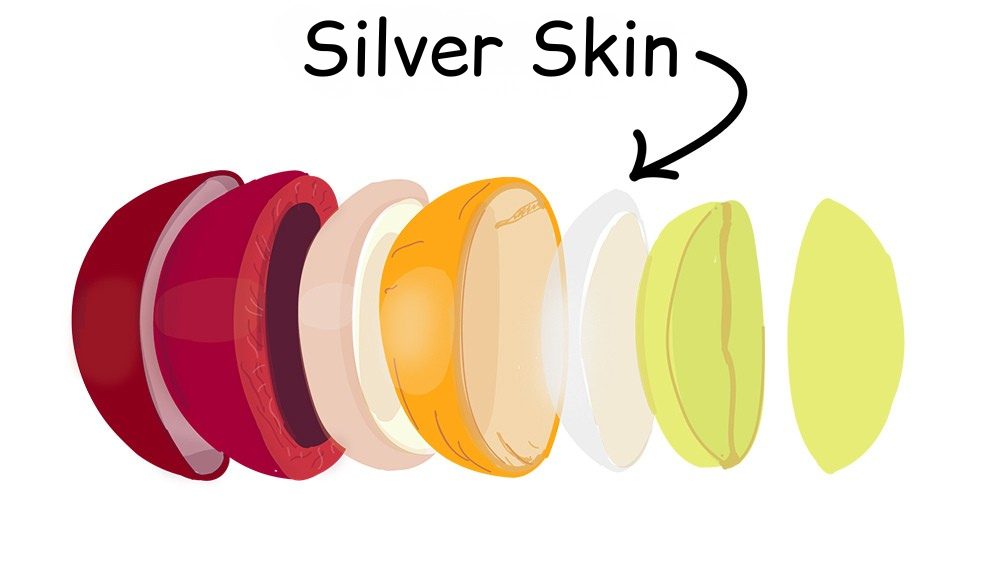
🤍 5. The Silver Skin: The Final Membrane
A delicate membrane clinging tightly to the seed.
It usually sheds during roasting and turns into chaff, although some fragments remain in the center groove.
Despite its fragility, it stabilizes flavor compounds during development.
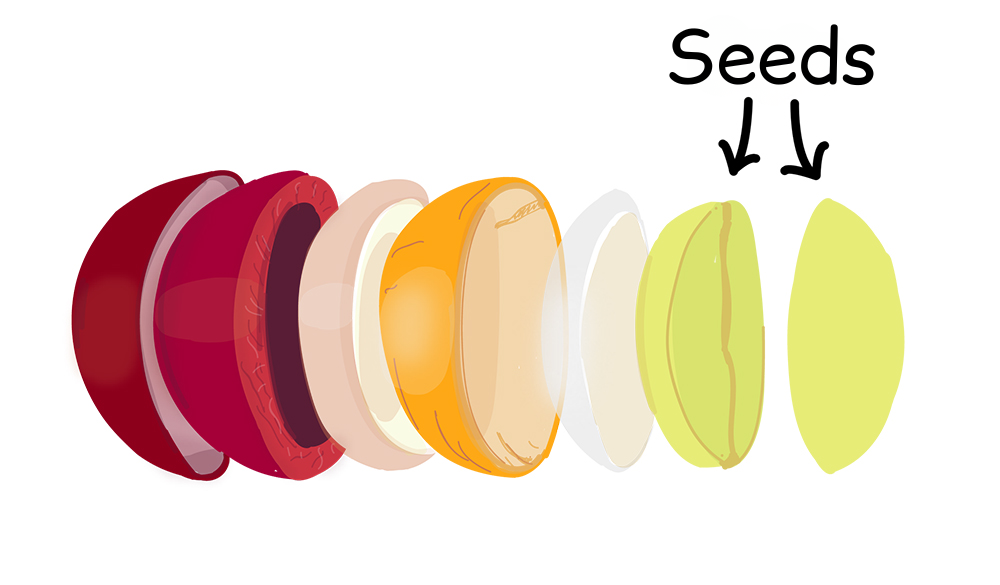
🟩 6. The Seeds: The Core of the Coffee Cherry
Most cherries contain two seeds, nestled like halves of a peanut.
These are the coffee beans we roast and brew.
Beans contain two major groups of compounds:
Soluble
caffeine
trigonelline
organic acids
sugars
minerals
some proteins
These extract into your coffee cup.
Insoluble
cellulose
polysaccharides
lignin
These shape the physical structure and respond to roasting heat.
Sometimes a cherry produces only one round seed — a peaberry — which often has a distinct, more concentrated flavor.
Why does the cherry structure matter?
The chemical composition of the bean — and thus the flavor of your coffee — depends on:
how well each layer developed,
how ripe the cherry was,
nutrients absorbed during growth,
environmental conditions,
the genetic variety.
If any layer fails, the flavor does too.
The cherry is the foundation; roasting and brewing simply reveal what nature created.
